
5 FACTORS THAT IMPACT HEAT SEAL INTEGRITY ON MEDICAL PACKAGING
WHAT IS HEAT SEALING?
Heat sealing is the process of melting polymeric materials to create a bond that could be permanent or peelable. This process is quite common in packaging efforts, such as enclosing a bag of chips. It can also be used in countless other applications from creating air ships to manufacturing implantable medical devices.
The growth of high-tech products that are delicate, perishable or in need of sterility has created an increasing demand for superior packaging. It is essential that these packages ensure the integrity of the immediate environment through hermetic heat seals.
While there are several methods to create heat seals, the most common are impulse and constant heat systems. Constant heat systems provide a continued source of heat via a larger heated block.
Constant heat machines do not incorporate a cooling cycle, so the film material stacks used in these applications require good hot tack qualities. In contrast, impulse systems energize a low mass, seal band for the duration of the heating cycle.
Impulse heat sealing has the advantage of a cooling cycle, which keeps films under pressure as they cool below their melting points. This cooling cycle enables impulse systems to work with a much broader variety of materials.
Cooling below the melting point can also help provide an improved cosmetic appearance.

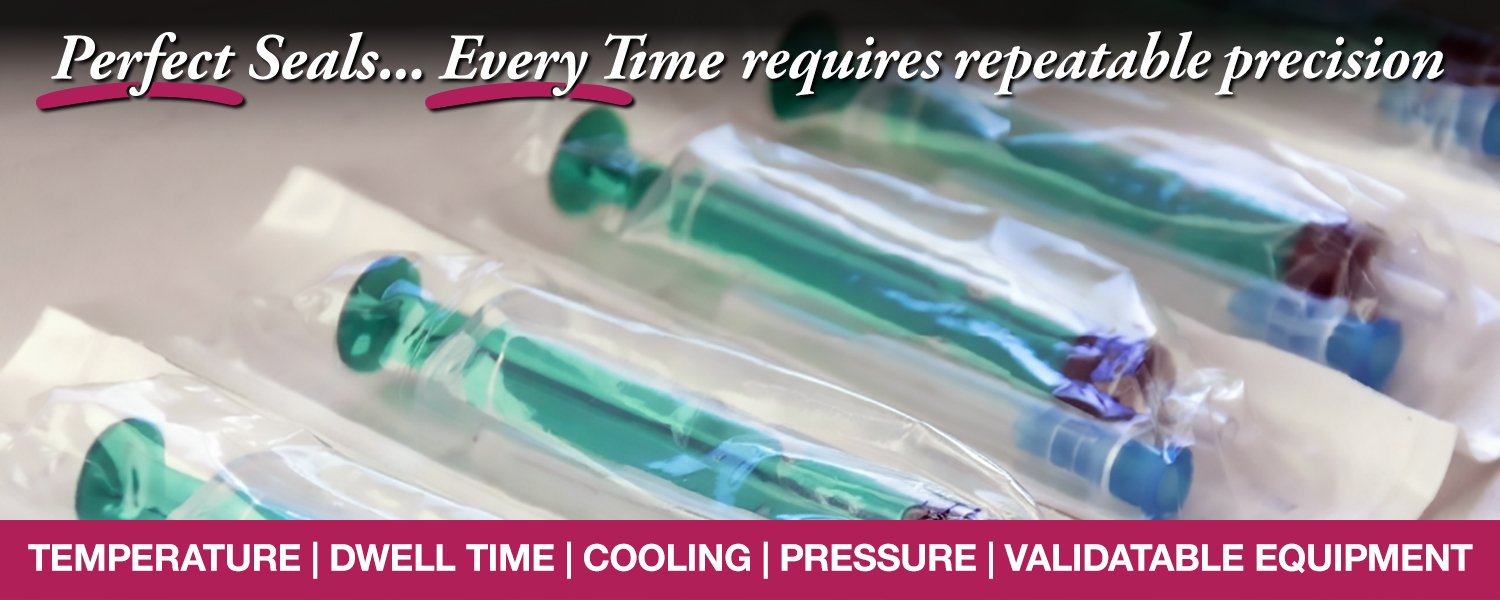
The medical device industry is one which requires consistent and repeatable hermetic heat seals as a means to maintain sterility until a product’s point of use.
Paying attention to these five areas can bring impulse heat-sealing perfection.
1) TEMPERATURE
Temperature is, unsurprisingly, a critical factor in seal quality and performance. The range between the seal’s initiation temperature, the point at which materials begin to melt and bond, and the maximum temperature is called the process window.
When temperatures exceed the process window, the amount of excess material (aka the squeeze-out) increases. This can cause a seal to fail. The material could also begin to burn to form pinholes, become brittle and risk fractures. If the temperature is lower than the operating window, the sealant or film will not melt sufficiently to form a strong bond risking contamination from the outside environment.
2) DWELL TIME
Dwell time (or dwell) is the total time heat is in contact with the materials. In constant heat sealing, the heat is applied for the duration of the sealing process. In impulse heat sealing, dwell time refers to the duration of each heat cycle. Dwell time is another dominant variable in seal integrity. Inadequate dwell times fail to let the heat penetrate enough to melt the films or sealant layers.
Too much dwell time, however, can damage the materials. Dwell and temperature have an inverse relationship. To optimize a seal cycle for the shortest time, decreasing the dwell will shorten your cycle. Achieving the same seal results will require an increase in temperature with a decrease in dwell time.
3) COOLING
The cooling phase is essential to forming a strong and stable seal. A seal is not made until it is allowed to cool below the melting point of the material. Impulse systems have the advantage of cooling while under pressure, enabling desirable results with difficult materials like polyethylene or non-woven materials. Cooling can also improve seal results of multi-layer films and mitigate seal creep on peelable pouches — if they are packed tightly.
4) PRESSURE
Pressure aids in the transfer of heat between sealing surfaces. However, the amount of pressure is generally less significant if the operating window is wide.
Once enough pressure is achieved, more pressure is typically not detrimental to the seal results — unless film extrusion develops. It is important to understand that a machine’s pressure setting is often not reflective of the actual sealing surface force. Sealing surface force is derived through an equation of several factors.
In an air cylinder actuating machine, for instance, knowing the cylinder diameter, number of cylinders, pressure behind the cylinders and working surface will help calculate pressure on the sealing surface.
In addition to having the right amount of pressure, uniformity of pressure across the heating surface is key to consistent heat seals.
5) VALIDATION EQUIPMENT
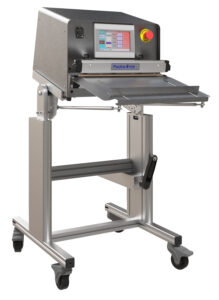 Medical applications require validated equipment and processes to ensure end results are consistent and expected. Unfortunately, many machines in the marketplace are not validatable.
Control of critical process parameters, such as temperature, dwell and pressure, is essential.
When impulse heat sealers took shape decades ago, temperature was controlled with potentiometers. In other words, knobs with arbitrary settings applied a fixed amount of energy to each sealing cycle.
Temperature escalation occurred at the point of seal because machines warmed up and retained heat throughout the day. Since the potentiometers could not control the temperature applied, heat seals would eventually become too hot — producing undesired results.
Until temperature feedback developed within heat sealing systems, operator skill was the only way to circumvent this challenge.
Thermocouples were the next step in sealing sophistication, as they created a temperature feedback loop — removing the need for operator intervention. Yet they presented other challenges including slow readings, misplacement issues, singular point of measurement and eventual degradation. Download the PDF here.
PACKWORLDUSA’S TOSS TECHNOLOGY
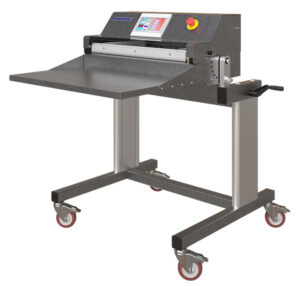 Seeing the need for better temperature control, manufacturers are increasingly turning to TOSS PIREG® Technology. It enables them to reach the desired sealing temperature within milliseconds, while regulating the selected temperature, for repeatable precision.
PackworldUSA utilizes TOSS PIREG Variable Resistance Control to take impulse heat sealing to the next level. TOSS heat sealing controls eliminate the need for thermocouples by calculating the resistance of the heat seal band itself. It interprets the temperature while quickly and accurately applying energy to achieve the specified set temperature.
The result is high quality hermetic seals with the validation and repeatability that the life science industry demands. Visit TOSS to Learn More.
Backed by Excellence
PackworldUSA stands behind its products with a 30-month warranty on all parts (excluding consumables). Each machine is built to exacting standards, meeting the rigorous demands of packaging professionals across industries.
Ready to revolutionize your packaging line?
Contact PackworldUSA at sales@packworldusa.com